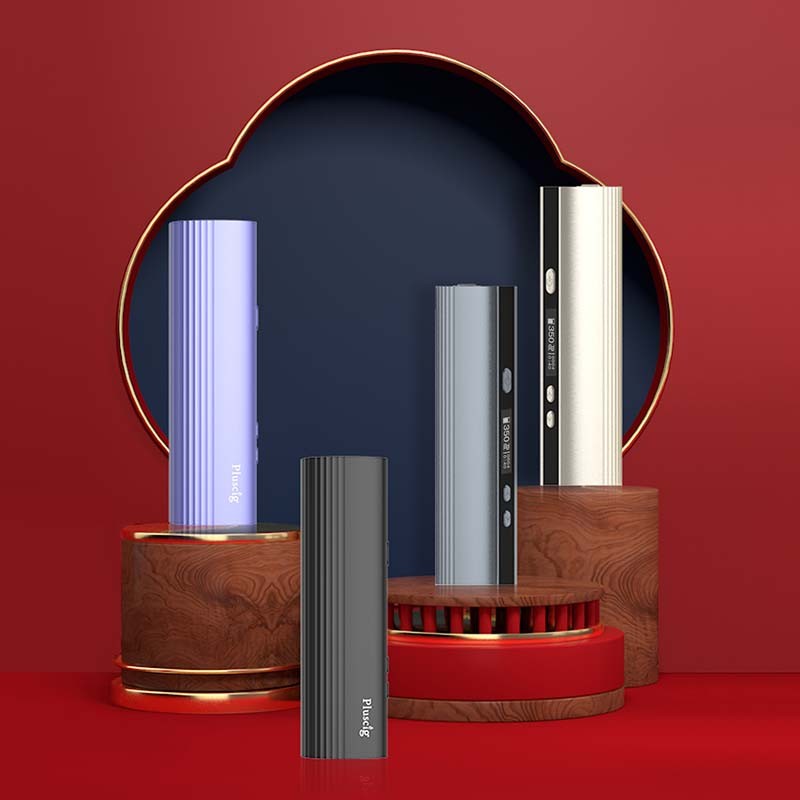
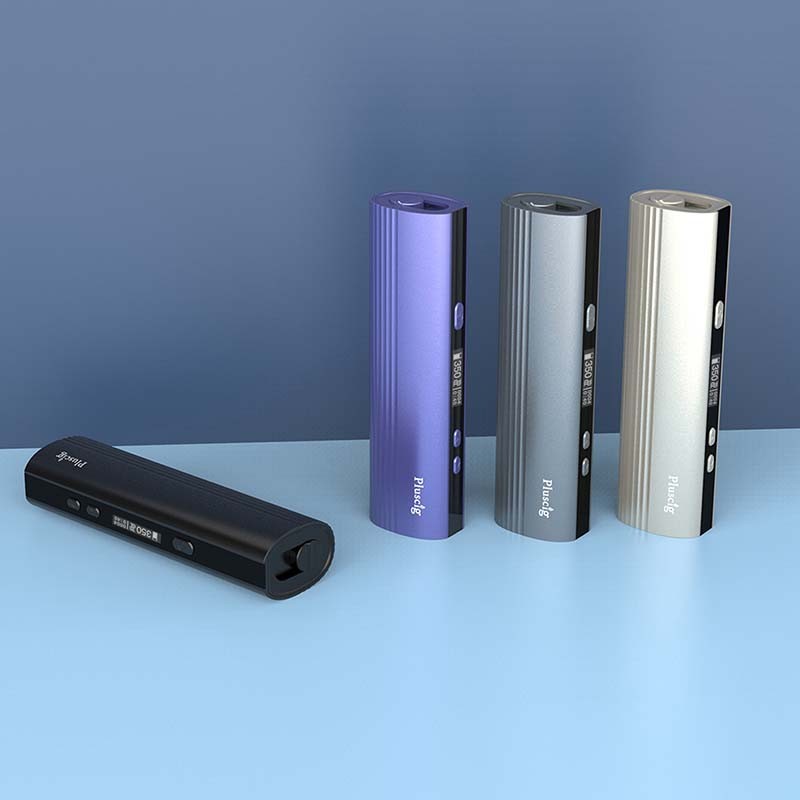
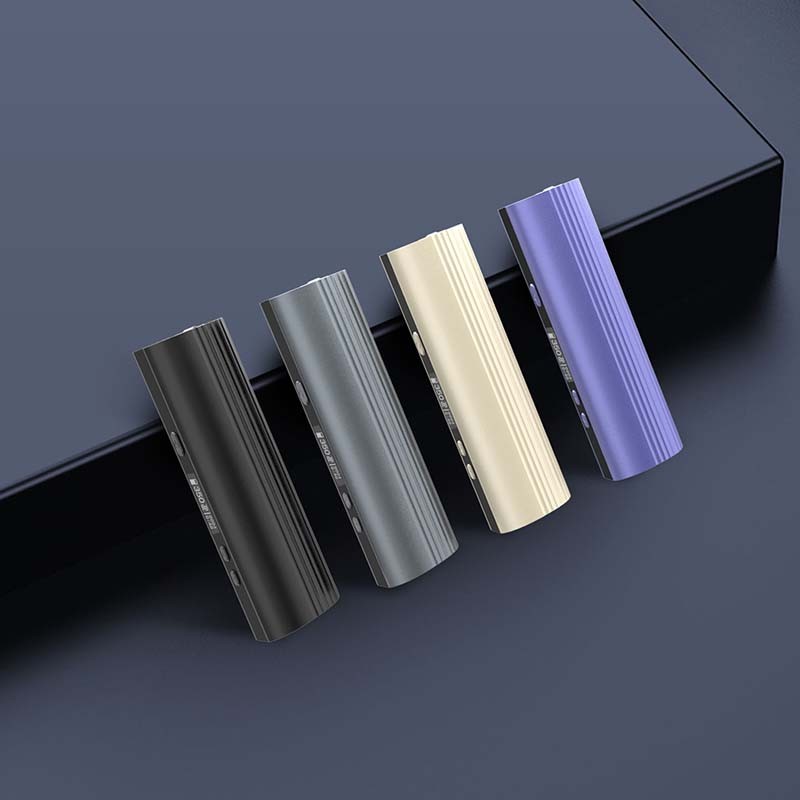
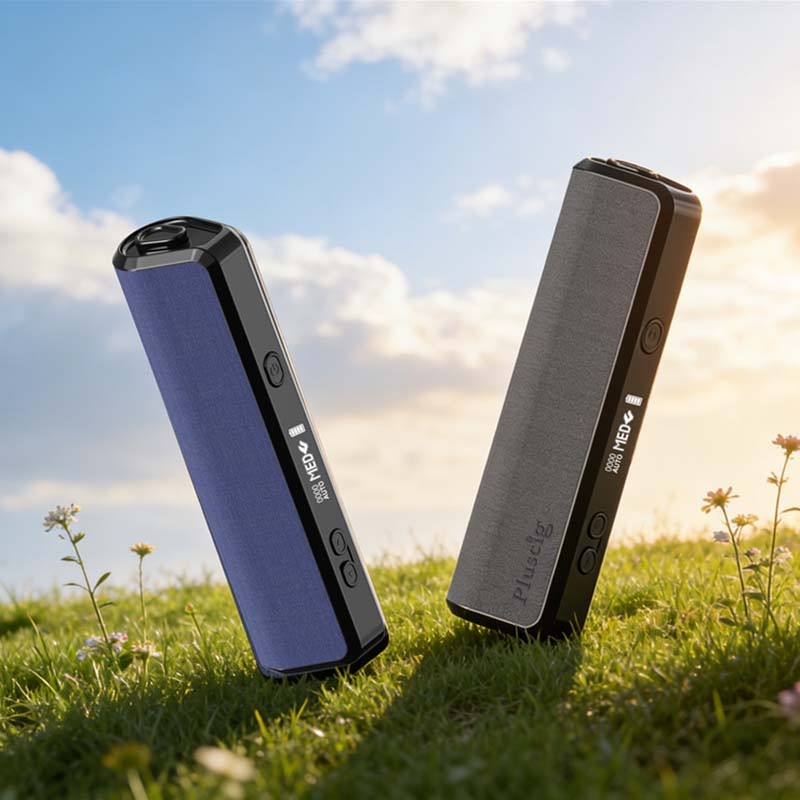


TEREA Tobacco Heating Device
TEREA Heated Tobacco Device for Compatible Tobacco Stick Applications
The ELVIA TEREA Heated Tobacco Device is developed for businesses evaluating a dedicated electronic heating platform for compatible TEREA-format tobacco sticks.
For distributors, importers, wholesalers and private-label brands, the selection of a heated tobacco device involves more than comparing appearance, battery capacity or basic operating specifications. The relationship between the device and its intended tobacco stick is a fundamental part of the product design.
This is especially relevant for TEREA-format applications.
TEREA tobacco sticks are designed for the IQOS ILUMA ecosystem, which uses a bladeless induction-based heating architecture. Official IQOS information explains that a metal heating element is positioned inside the TEREA stick and interacts with the induction system in the compatible device.
For an independent device supplier, therefore, TEREA compatibility should be treated as a specific technical requirement rather than a generic HNB marketing term.
The ELVIA product is positioned around this requirement, providing a starting point for compatibility evaluation, product sampling and international B2B development.

A Device Concept Built Around the Consumable
One of the most important differences between general electronic smoking products and heated tobacco systems is the role of the consumable.
In a typical disposable vape, the device is supplied with an integrated e-liquid and atomization system.
In a heated tobacco product, the tobacco stick becomes part of the operating system.
This means the device has to be considered together with:
Tobacco stick format
Heating interface
Internal device structure
Electronic control
Power supply
Heating cycle
User operation
For a TEREA-oriented product, this relationship is particularly important because TEREA was designed around a specific heating architecture rather than the blade-based systems used by earlier IQOS generations. Official IQOS documentation states that TEREA is intended for IQOS ILUMA and should not be used with earlier blade-generation devices.
For B2B buyers, this creates a clear sourcing principle:
Start with the target tobacco stick, then verify the device architecture.
What TEREA Compatibility Means for B2B Buyers
The phrase TEREA compatible device can have different meanings in online product listings, so commercial buyers should look beyond the wording itself.
A professional compatibility evaluation may consider:
Tobacco stick dimensions
Stick construction
Heating-element interaction
Device chamber design
Energy-transfer method
Electronic control
Insertion and extraction
Heating-cycle behavior
Device protection functions
Repeated-use performance
This is why ELVIA recommends sample evaluation before a commercial order is finalized.
A buyer should not assume that a generic HNB device is suitable for a TEREA-format stick simply because both products belong to the heated tobacco category.
The actual device and consumable combination needs to be evaluated according to the intended configuration.
This approach gives importers and distributors a more reliable basis for product selection and reduces the risk of purchasing a device that does not meet the requirements of the target market.
Why TEREA and HEETS Should Be Kept as Separate Product Concepts
TEREA and HEETS are often grouped together in broad online searches because both belong to the heated tobacco category.
From a product-development perspective, however, they should remain separate.
Official IQOS documentation identifies TEREA with the ILUMA induction system and explains that the heating element is incorporated into the tobacco stick. HEETS products are associated with earlier blade-heating IQOS generations.
This difference has an important implication for ELVIA's website architecture.
The TEREA page should focus on:
TEREA compatibility → device integration → product development → sourcing
The HEETS page should focus on:
HEETS compatibility → compatible stick format → device selection → sourcing
This separation allows each page to answer a different user requirement rather than creating multiple pages with substantially identical content.
It also gives search engines clearer signals about the purpose of each URL.
A Compatibility-Focused Product Development Process
For international OEM and private-label projects, compatibility can be incorporated into the development process from the beginning.
A practical workflow can follow six stages.
Market Requirement
The buyer first identifies the intended country or region and the relevant product category.
Consumable Identification
The exact TEREA-format tobacco stick intended for the project is identified.
Technical Review
The manufacturer evaluates the relationship between the stick format and the proposed device configuration.
Sample Evaluation
Physical samples are assessed before the commercial specification is finalized.
Specification Approval
The buyer confirms the approved device configuration and associated requirements.
Production
The approved specification is transferred into pilot or commercial manufacturing.
This process is particularly useful for companies entering a new heated tobacco market because it separates technical validation from commercial commitment.
Designed for Device-and-Stick Integration
A modern heated tobacco device is a combination of mechanical, electrical and thermal components.
The external housing is only one part of the product.
Inside the device, the following systems must work together:
Battery → Control Electronics → Heating System → Tobacco Stick Interface → User Operation
For a TEREA-format application, the tobacco stick interface is particularly important.
The device must be designed around the intended heating relationship rather than simply providing an empty chamber.
This is also why technical specifications should be evaluated together instead of separately.
A change to the chamber structure, for example, can affect the heating interface. A change to the electronic control system can influence the heating cycle. A change to the battery configuration can affect operating characteristics.
For commercial production, these relationships need to be documented and controlled.
Practical Product Evaluation Before Mass Production
A professional sample evaluation can provide useful information before a large order is placed.
For a TEREA-compatible HNB device, buyers can consider evaluating:
Physical Interface
Check how the intended tobacco stick fits into the device and whether insertion and removal are practical.
Heating Operation
Verify that the device performs its intended heating cycle with the target consumable.
Control Functions
Check buttons, indicators, activation and operating feedback according to the approved configuration.
Charging
Evaluate the charging interface and general charging operation.
Device Handling
Assess portability, grip, insertion and everyday handling.
Repeatability
Where possible, evaluate multiple samples rather than relying on one demonstration unit.
This final point is particularly important for B2B sourcing.
A single sample demonstrates that a product can work.
A consistent batch demonstrates that the supplier can manufacture the approved product repeatedly.
Manufacturing Consistency Matters
For a commercial heated tobacco device, quality should not be judged only by the finished appearance.
Production consistency is equally important.
A professional quality process may include inspection of:
Incoming components
Housing dimensions
Electronic assemblies
Battery components
Heating components
Charging functions
Assembly quality
Device operation
Finished-product performance
Packaging
The specific inspection criteria depend on the product configuration and manufacturing requirements.
For OEM customers, an approved sample can serve as the reference point for subsequent production.
The objective is to maintain consistency between:
Approved Sample → Production Specification → Finished Product
This provides a stronger quality-control framework than relying only on a visual product inspection.
A Better Starting Point for OEM and Private Label
Businesses entering the heated tobacco category may have different requirements.
A distributor may simply need a ready-to-supply device.
A private-label company may need branded packaging and product documentation.
An established importer may require a specific product configuration for a regional market.
An OEM customer may want to discuss product appearance, accessories and production requirements.
The same TEREA-compatible product platform can therefore be evaluated from different commercial perspectives.
Potential project discussions may include:
Product configuration
Housing design
Brand requirements
Packaging
Accessories
Product documentation
Sample quantities
Production quantities
Quality requirements
Delivery planning
The final scope depends on the product version, order volume and destination-market requirements.
TEREA-Compatible Device Selection for International Markets
A product that is technically suitable for one market is not automatically approved for sale in another.
For international B2B projects, the sourcing process should therefore include a separate market review.
Depending on the destination, businesses may need to examine:
Tobacco-product regulations
Import requirements
Age restrictions
Product registration
Packaging rules
Labeling requirements
Battery and electrical requirements
Advertising restrictions
Trademark considerations
ELVIA can provide product and technical information for sourcing evaluation, while the importer or distributor should independently confirm the laws applicable to its market.
This distinction is an important part of responsible B2B product development.
TEREA Compatible HNB Device for Distribution Programs
The TEREA-compatible category can be relevant to businesses developing specialized heated tobacco product portfolios.
Potential B2B channels may include:
Regional distributors
Tobacco-product importers
Heated tobacco wholesalers
Specialty retailers
Private-label businesses
OEM product developers
Alternative smoking-product distributors
For these customers, product compatibility can become part of a broader commercial proposition.
Instead of selling a generic electronic device, the business can develop a clearly defined product around a specific consumable format and target market.
This makes the product easier to categorize within an international B2B catalog.
Product Positioning Without Overlapping Other HNB Pages
ELVIA's HNB product architecture can be organized around different search intents.
The main HNB category can explain the broader technology and product range.
The HEETS-compatible page can address buyers looking specifically for HEETS-format compatibility.
The TEREA-compatible page can address buyers evaluating TEREA-format compatibility.
Individual model pages can then focus on the specifications and features of specific devices.
This creates a cleaner relationship between:
Category → Compatibility → Product Model
For the TEREA page, the primary search intent should remain TEREA compatible device, rather than attempting to rank for every generic term related to heated tobacco.
That keeps the page focused and reduces unnecessary keyword overlap.
TEREA Compatible Device vs. General HNB Device
A general HNB device describes a product category.
A TEREA-compatible device describes a more specific product application.
| Comparison | General HNB Device | TEREA-Compatible Device |
|---|---|---|
| Search intent | HNB product discovery | TEREA device compatibility |
| Consumable focus | Product-specific | TEREA-format stick |
| Technical focus | General heating | Device-stick integration |
| Buyer intent | Broad | More specific |
| Product evaluation | Device features | Compatibility + device features |
| B2B use | General sourcing | Targeted sourcing |
This distinction is useful for both buyers and website architecture.
The TEREA page should therefore answer the more specific question:
“Is this device suitable for the TEREA-format product requirement I am developing?”
Product Information at a Glance
| Product Attribute | Details |
|---|---|
| Product Category | Heat Not Burn / Heated Tobacco Device |
| Product Positioning | TEREA-format tobacco stick application |
| Intended Consumable | Compatible TEREA-format tobacco sticks |
| Heating Concept | Controlled electronic heating |
| Device Type | Rechargeable HNB device |
| Charging Interface | Type-C, according to final configuration |
| Application | Adult heated tobacco product markets |
| Business Model | Wholesale / Distribution / OEM / Private Label |
| Compatibility | Subject to technical evaluation |
| Sample Testing | Recommended before commercial production |
Final compatibility and specifications should be confirmed against the actual production configuration and intended tobacco stick format.
Frequently Asked Questions About TEREA Compatible Devices
What is a TEREA compatible HNB device?
A TEREA compatible HNB device is a heated tobacco device developed around compatibility with a TEREA-format tobacco stick. The exact compatibility should be verified against the intended device and consumable configuration.
Why is TEREA compatibility different from HEETS compatibility?
TEREA and HEETS are associated with different heating architectures. TEREA is designed for IQOS ILUMA's bladeless induction system, while HEETS is associated with earlier blade-based systems.
Can any HNB device use TEREA sticks?
Compatibility should not be assumed. Official IQOS information states that TEREA is designed specifically for the ILUMA platform and is not intended for earlier blade-generation devices.
For third-party devices, compatibility should be independently evaluated against the intended product configuration.
What information should I provide when requesting a TEREA-compatible device?
For a B2B project, useful information includes the target market, intended tobacco stick format, estimated order quantity and desired product configuration.
Can ELVIA provide samples?
Qualified B2B customers can discuss sample requirements with ELVIA so that the intended device and tobacco stick configuration can be evaluated before larger production quantities are considered.
Can this product support private-label projects?
OEM and private-label requirements can be discussed according to the selected product configuration, packaging requirements, branding requirements, order quantity and destination market.
Is this an IQOS or TEREA-branded product?
No. TEREA and IQOS are third-party trademarks. ELVIA uses the TEREA name only to describe the intended compatible tobacco-stick format and does not claim affiliation, sponsorship or endorsement.
Can the product be distributed internationally?
Distribution depends on the regulations of the destination market. Importers and distributors should independently verify applicable tobacco, product, electrical, labeling, age-restriction, advertising and trademark requirements before commercial launch.
Built for Buyers Who Need a Defined Product Application
The most useful heated tobacco device is not necessarily the one with the longest specification list.
For B2B buyers, the more important question may be whether the device has been developed around the exact consumable format required for the intended market.
The ELVIA TEREA Heated Tobacco Device is positioned around this application-specific approach.
Rather than combining TEREA, HEETS and generic HNB requirements into one product description, the page focuses specifically on TEREA-format compatibility, product evaluation, manufacturing consistency and commercial development.
This provides distributors, importers, wholesalers and private-label businesses with a clearer starting point for evaluating a TEREA-compatible product.
The recommended next step is straightforward:
Identify the target market → confirm the intended tobacco stick → evaluate compatibility → approve the product specification → proceed to production.
Request a TEREA-Compatible HNB Device Sample
Looking for a TEREA compatible HNB device for wholesale, distribution or private-label development?
Share your target market, intended tobacco stick format, required specifications and estimated order quantity with ELVIA.
The team can discuss product compatibility, sample evaluation, technical requirements and potential OEM/private-label arrangements.
ELVIA supports qualified B2B customers with product information, technical communication, compatibility evaluation and OEM/private-label development, subject to applicable product and market requirements.
Contact ELVIA Team Today To Discuss Your Business
Inquiry
Related Products
Categories
Latset News
CONTACT US
Contact: Lisa Shen
Phone: 18122097580
E-mail: sales@elviavape.com
Add: No.18, Fumin Industrial Zone, Shenzhen, China
 Send Email
 WhatsApp