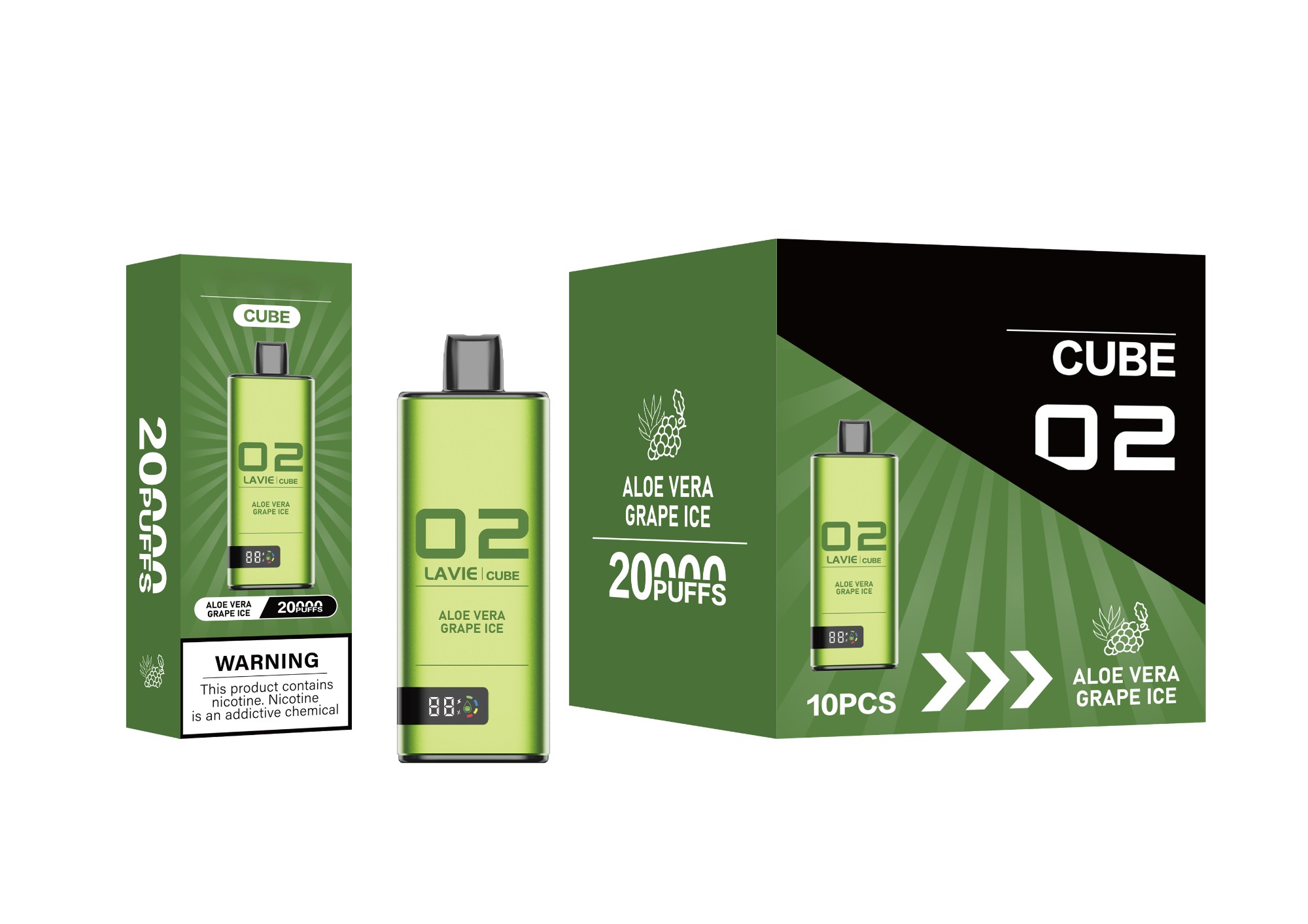

60ml E-Liquid Product
60ml E-Liquid Product for Structured Product Lines
ELVIA 60ml E-Liquid is a larger-volume liquid product format designed for brands developing organized e-liquid product lines with defined flavor, formulation, packaging, and SKU specifications.
Rather than treating every 60ml vape liquid as an isolated product, ELVIA can structure the format as part of a broader product architecture. This allows multiple flavors to share a consistent 60ml format while maintaining their own formulation, product identity, packaging information, and production reference.
For brands developing several e-liquid products at the same time, this product-line approach can make it easier to manage individual flavors without losing consistency across the overall range.
The 60ml format can therefore be defined through several connected elements:
60ml liquid volume
Individual flavor profile
Approved formulation
Product SKU
Packaging configuration
Label information
Batch identification
Market requirements
Product documentation
This makes the 60ml e-liquid a defined commercial product rather than simply a larger-volume liquid specification.
60ml E-Liquid as a Product-Line Format
A product portfolio often needs consistency as well as differentiation.
If several 60ml e-liquid flavors are launched under the same brand, customers generally need to recognize them as part of one product family while still being able to distinguish each individual SKU.
A structured 60ml product architecture can provide this balance.
The common product framework can include:
60ml Format → Common Packaging System → Individual Flavor → Individual Formula → Individual SKU
This means the overall product family can maintain a consistent appearance and specification structure, while each flavor remains a separate commercial product.
For B2B product development, this approach can simplify communication between formulation, packaging, purchasing, quality, and production teams.
Building a 60ml Flavor Matrix
One of the most useful ways to organize a multi-flavor e-liquid range is through a flavor matrix.
Instead of developing flavors independently without a common structure, a brand can define a portfolio according to different flavor directions.
A flavor matrix may include categories such as:
Fruit-oriented profiles
Cooling profiles
Beverage-inspired profiles
Sweet profiles
Mixed flavor concepts
Brand-specific signature profiles
The exact flavor range depends on the customer's product strategy.
The purpose of the matrix is not to make every flavor identical. It is to create a structured framework in which each flavor has a defined product position.
Each selected flavor can then be linked to its own formulation reference and SKU.
This provides a clearer product hierarchy for both internal product management and customer-facing product information.
Individual Formula for Every Flavor SKU
Although several products may share the same 60ml format, each approved flavor should have its own product specification.
A flavor name by itself does not necessarily define the complete formulation.
For this reason, ELVIA can structure each SKU around an approved formulation reference.
A typical relationship is:
Flavor Concept → Formula Development → Sample → Approval → SKU
Once a formula is approved, it becomes the reference for the corresponding product.
This approach is useful when a brand has multiple 60ml e-liquid flavors because it prevents the entire product family from being treated as one generic liquid.
Each SKU remains independently identifiable while following the same 60ml product architecture.
Developing a Consistent 60ml Product Family
Consistency is particularly important when multiple products are sold under the same brand.
The product family can maintain common characteristics such as:
Nominal volume
Container format
Packaging structure
Label dimensions
Product identification system
Batch coding approach
At the same time, individual SKUs can vary according to their:
Flavor
Formulation
Product code
Label content
Market configuration
This creates a balance between standardization and differentiation.
For a growing e-liquid portfolio, that balance can reduce unnecessary complexity while allowing new flavors to be added within an established framework.
Flavor Development Workflow
ELVIA can structure 60ml e-liquid flavor development around a defined product brief.
A typical workflow may include:
Product Concept
The customer defines the desired flavor direction and target product position.
Initial Formulation
The development team prepares an initial formulation according to the agreed requirements.
Sample Evaluation
The sample is reviewed against the intended product concept.
Adjustment
Where necessary, the formulation is revised based on the development feedback.
Final Approval
The approved version becomes the reference for the corresponding product SKU.
This creates a clear development path and gives the customer a defined point at which the product moves from development into production preparation.
60ml E-Liquid Packaging System
A multi-SKU product line benefits from a consistent packaging architecture.
For a 60ml e-liquid range, the packaging system can be developed around common structural elements while allowing individual SKU information to change.
Common elements may include:
Container format
Closure configuration
Label dimensions
Brand identity
Product family design
SKU-specific elements may include:
Flavor name
Product code
Formula identification
Batch information
Market-specific labeling
Other required product information
This approach can make a product range visually and technically consistent without making different flavors difficult to distinguish.
Product Identification and SKU Structure
A clear product identification system is useful when several 60ml e-liquid products are being developed simultaneously.
Each SKU can be associated with its own product information.
For example:
Brand → Product Family → 60ml Format → Flavor → SKU → Batch
This hierarchy gives different teams a common reference.
Purchasing can use the SKU when requesting production.
Packaging teams can use the same product reference when preparing artwork.
Quality teams can associate inspection records with the relevant product.
Production can use the approved specification for the corresponding SKU.
This reduces the need to identify products only through flavor names or photographs.
60ml E-Liquid Specification
| Product Attribute | Specification |
|---|---|
| Product Category | E-Liquid |
| Product Format | 60ml |
| Nominal Volume | 60ml |
| Product Family | Project-specific |
| Flavor | Configurable |
| Formulation | SKU-specific |
| Nicotine | Market-dependent where applicable |
| Container | Project-specific |
| Packaging | Customizable |
| Label | Brand / market specification |
| Product Code | SKU-specific |
| Batch Identification | According to project requirements |
| Development | Sample-based |
| Quality Control | Specification-based |
| Documentation | Project and market dependent |
The final specification should be confirmed according to the actual product configuration and destination market.
Formulation Parameters for 60ml Vape Liquid
The 60ml format defines the nominal liquid quantity, but the formulation remains an independent product attribute.
Depending on the project, the formulation may be developed around the required base system, flavor profile, nicotine configuration where applicable, and other agreed technical characteristics.
For a multi-flavor product line, each approved formula should remain associated with its specific SKU.
This creates a more reliable product structure than using one generic formulation description across an entire 60ml range.
The formulation should also be reviewed in the context of the intended product application and applicable market requirements.
Device Context During Product Development
The intended device can provide useful information when developing a 60ml e-liquid product.
Different device architectures can have different requirements related to liquid delivery and heating.
For this reason, the product brief may include:
Intended device category
Heating configuration
Liquid delivery system
Filling method
Product application
Relevant formulation requirements
This information provides context for the development team.
It should not be interpreted as a universal compatibility claim. The suitability of a specific liquid depends on the actual formulation, device, and product configuration.
Managing Nicotine Specifications
Nicotine configuration should be defined separately from liquid volume and flavor.
Where nicotine-containing products are legally applicable, the required specification should be determined according to the destination market.
Market requirements can differ in areas such as:
Nicotine concentration
Packaging
Labeling
Warnings
Product notification
Testing
Documentation
Therefore, the intended market should be established before the final commercial specification is approved.
ELVIA can work according to the technical requirements provided for the project, while customers should confirm the regulations applicable to the specific destination market.
Quality Control Across Multiple 60ml SKUs
A multi-SKU product line requires quality control at both the individual product level and the portfolio level.
At the individual SKU level, the focus can include the approved formulation, flavor specification, packaging information, filling requirements, and product identification.
At the portfolio level, common packaging elements and production procedures can be reviewed for consistency.
A structured quality workflow may include:
Material Control → Formulation Control → Filling Control → Packaging Inspection → Finished Product Review
The exact inspection criteria should be defined according to the actual product specification.
This allows quality management to be based on measurable product requirements rather than general descriptions.
Batch Management for a 60ml Product Range
Batch identification becomes particularly useful when a brand operates multiple flavors under the same 60ml product family.
A batch reference can help connect:
SKU → Formula → Production Batch → Finished Product
This relationship provides a clearer product history and can support communication between the customer and manufacturer.
For repeat production, the batch information can be associated with the corresponding approved product specification.
The exact batch records and traceability information should be established according to the customer's requirements and applicable quality procedures.
Scaling a 60ml E-Liquid Range
A structured product architecture can make it easier to introduce additional flavors.
Once the core 60ml format has been established, new SKUs can be developed within the same overall framework.
The development process can remain:
New Flavor Concept → Formula Development → Sample → Approval → New SKU
while common elements such as the container and packaging structure may remain consistent where appropriate.
This allows the product line to expand without requiring an entirely new architecture for every flavor.
For brands planning a larger e-liquid catalog, this can make product management more systematic.
Private-Label 60ml E-Liquid Development
For private-label customers, the 60ml product can be developed around the customer's own brand requirements.
The development brief may include:
Brand identity
Flavor direction
Formula requirements
Product volume
Packaging concept
Label artwork
Target market
Intended device
Expected production quantity
The development process can then move from formulation samples to packaging confirmation and production preparation.
This provides a structured route from a brand concept to a defined 60ml product SKU.
Product Documentation and Traceability
Technical documentation provides supporting evidence for the product specification.
Depending on the project, documentation may include:
Product specification
Formula reference
Flavor information
Packaging specification
Label information
Product code
Batch information
Quality records
Market-specific documents
The exact documents available depend on the actual product configuration and customer requirements.
For a multi-SKU portfolio, maintaining consistent documentation structures can also make it easier to distinguish one product from another.
60ml E-Liquid and Market Preparation
A product specification suitable for one market should not automatically be assumed to meet the requirements of another.
E-liquid requirements can vary by country or region.
Depending on the destination, regulations may address formulation, nicotine, labeling, packaging, testing, notification, and documentation.
The target market should therefore be established before the final product specification is confirmed.
This is particularly important for private-label brands preparing the same product family for multiple jurisdictions.
Why a Structured 60ml Product System Matters
The value of a well-defined 60ml e-liquid product is not only the liquid itself.
A structured product system connects:
Formula + Flavor + Packaging + SKU + Batch + Documentation
This relationship gives the product a clearer identity throughout its lifecycle.
It also makes communication more precise when the same brand manages several flavors or multiple product versions.
For B2B product development, this structure can be more useful than relying on a generic product description.
ELVIA Product Development Approach
ELVIA Vape Tech Co., Ltd. can structure 60ml e-liquid projects around defined product requirements and documented product specifications.
The development process can connect formulation, flavor development, packaging, SKU identification, production requirements, and quality control.
This creates a product framework that can support both initial development and future product expansion.
For brands building a multi-flavor e-liquid portfolio, the same 60ml architecture can be used as a foundation while each flavor remains independently specified.
60ml E-Liquid FAQ
What is 60ml e-liquid?
60ml e-liquid is a liquid product with a nominal volume of 60ml. Its complete product specification can also include formulation, flavor, packaging, SKU identification, and applicable market requirements.
Can multiple flavors be developed in the 60ml format?
Yes. Different flavor formulations can be developed as individual SKUs while maintaining a common 60ml product structure.
Can each flavor have a different formulation?
Yes. Each flavor can be associated with its own approved formulation and product specification.
Can the packaging remain consistent across different flavors?
A common packaging architecture can be used where appropriate, while flavor-specific product information can distinguish individual SKUs.
Can the 60ml product be developed for private-label brands?
A private-label project can be structured around the customer's brand, formulation, flavor, packaging, labeling, and target-market requirements.
Can nicotine specifications vary between products?
Where legally applicable, nicotine specifications can be defined according to the individual product and destination market.
Can ELVIA provide product samples?
Sample development can be arranged according to the agreed product brief before commercial production.
What information is needed to develop a 60ml e-liquid?
Useful information includes target market, flavor direction, formulation requirements, packaging concept, intended device, labeling requirements, nicotine specification where applicable, and estimated production quantity.
Request a 60ml E-Liquid Product Specification
If you are developing a 60ml e-liquid product or building a multi-flavor product range, ELVIA can work from your product concept and organize the project around defined formulation, flavor, packaging, and SKU requirements.
Provide your target market, flavor direction, packaging concept, formulation requirements, intended application, and estimated production quantity.
Contact ELVIA Team Today To Discuss Your Business
Inquiry
Related Products
Categories
Latset News
CONTACT US
Contact: Lisa Shen
Phone: 18122097580
E-mail: sales@elviavape.com
Add: No.18, Fumin Industrial Zone, Shenzhen, China
 Send Email
 WhatsApp