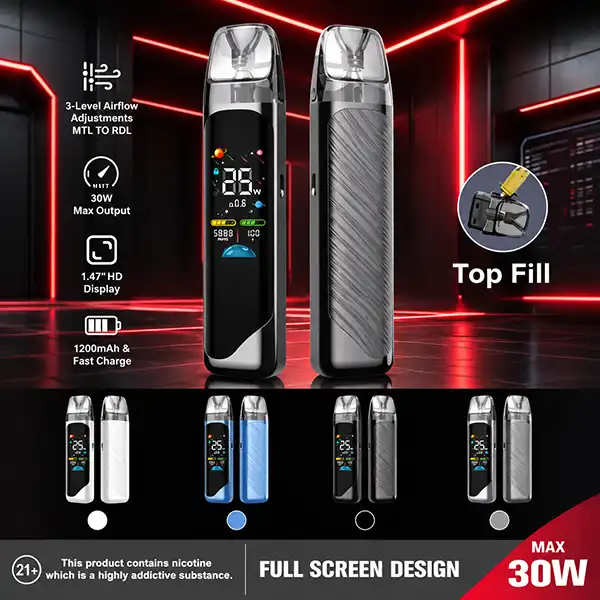
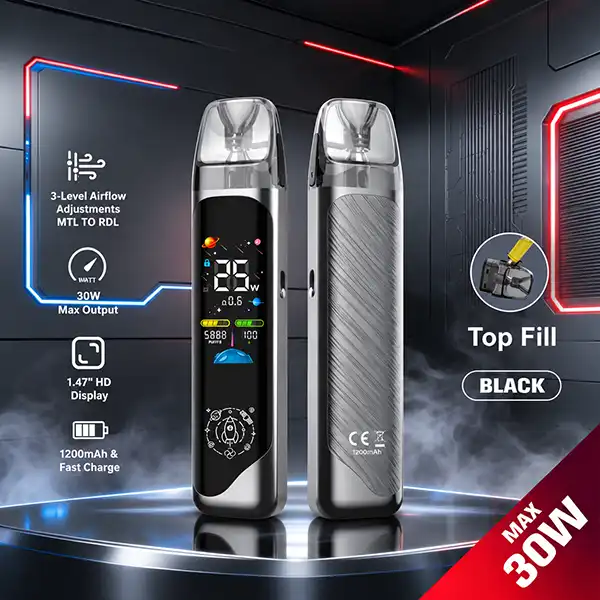
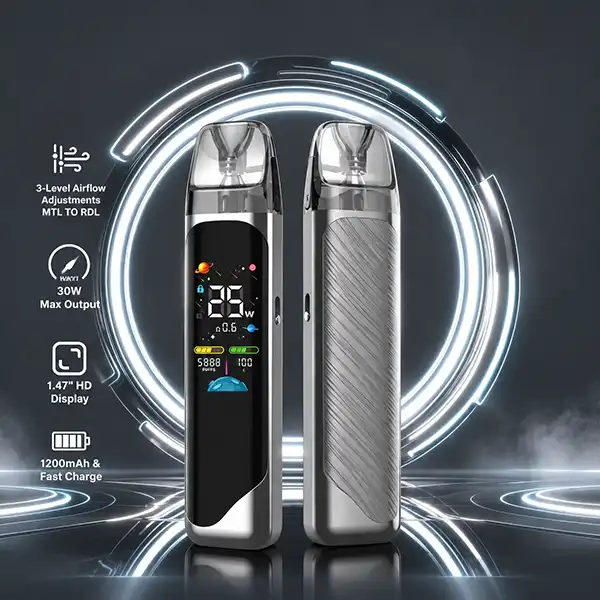
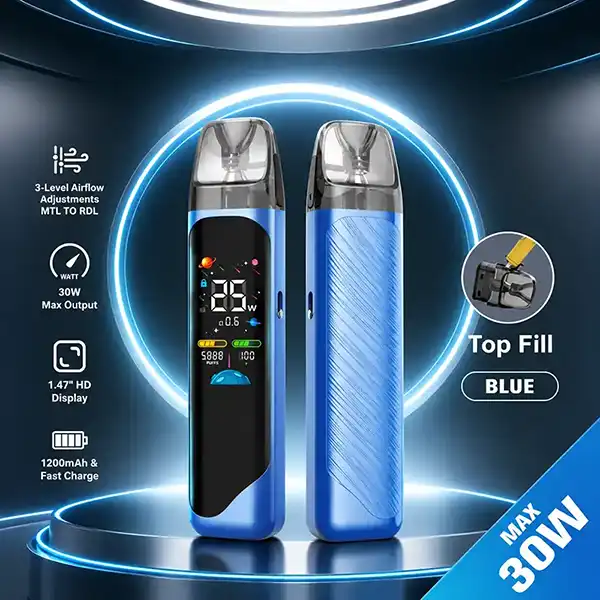
2ml Open Pod Device
2ml open pod
Resistance: 0.4/0.6/0.8Ω
Battery: 1200mAh battery with Type-C port
E-Liquid: Top fill
digital screen
Airflow control
2ml Open Pod Device with 1200mAh Rechargeable Battery
The ELVIA 2ml Open Pod Device is a rechargeable pod-based device designed around an open-pod configuration, with a 2ml e-liquid capacity and multiple resistance options. Its technical configuration combines a 1200mAh built-in battery, Type-C charging port, top-fill pod structure, digital screen and adjustable airflow control.
For product sourcing teams, distributors and private-label businesses evaluating pod device configurations, these specifications provide a clear starting point for assessing device architecture, component options and product positioning.
The device supports three resistance configurations: 0.4Ω, 0.6Ω and 0.8Ω. This allows buyers to evaluate different coil specifications within the same product platform, subject to the manufacturer's confirmed configuration and compatibility requirements.
With its compact pod format, rechargeable battery architecture and integrated display, this 2ml open pod device brings several important hardware features together in one product.
Product Overview and Key Specifications
Understanding the technical configuration is essential when evaluating an open pod device for distribution or private-label development. The following specifications describe the current product configuration provided by ELVIA.
| Specification | Product Details |
|---|---|
| Product Type | Open Pod Device |
| E-Liquid Capacity | 2ml |
| Resistance Options | 0.4Ω / 0.6Ω / 0.8Ω |
| Battery Capacity | 1200mAh |
| Charging Port | Type-C |
| Filling System | Top Fill |
| Display | Digital Screen |
| Airflow | Adjustable Airflow Control |
| Pod Configuration | Open Pod |
The 2ml e-liquid capacity defines the pod's stated reservoir volume. The three resistance options provide alternative coil configurations, while the rechargeable battery and Type-C port form the device's power system.
The top-fill structure, digital screen and adjustable airflow control are additional hardware elements that buyers can evaluate when comparing product configurations.
For procurement accuracy, final specifications, component compatibility and available configurations should be confirmed against the manufacturer's technical documentation before ordering.
2ml Open Pod Configuration
The 2ml open pod configuration is a central characteristic of this device. Unlike a prefilled-pod configuration, an open pod is designed around a refillable reservoir structure.
For product buyers, the distinction between open-pod and prefilled-pod architecture is important when defining product categories, packaging requirements and the intended distribution model.
This device combines a 2ml reservoir with a top-fill structure. The filling arrangement is integrated into the pod design, making the filling mechanism an important part of the product's overall hardware specification.
When evaluating a 2ml open pod device, buyers should consider several technical details:
Confirmed e-liquid reservoir capacity.
Pod filling structure and access points.
Compatibility between the pod and device body.
Supported resistance configurations.
Pod replacement and component availability.
Relevant market-specific product requirements.
These details help establish whether the device configuration matches the buyer's product specification and intended market requirements.
For OEM and wholesale evaluation, it is also important to confirm whether the pod and device components are supplied together or as separately specified components.
Three Resistance Options: 0.4Ω, 0.6Ω and 0.8Ω
Resistance is one of the main electrical specifications of a pod device. ELVIA's 2ml open pod device is available with three stated resistance options: 0.4Ω, 0.6Ω and 0.8Ω.
These resistance values represent different coil configurations within the product specification. Buyers comparing the available options should evaluate the manufacturer's documented operating parameters rather than assuming that resistance alone determines device performance.
The three configurations are:
0.4Ω Resistance
The 0.4Ω option represents the lowest resistance value among the three specified configurations. Buyers evaluating this version should confirm its compatible operating power, supported pod configuration and manufacturer-approved operating conditions.
0.6Ω Resistance
The 0.6Ω option provides an intermediate resistance specification. It can be evaluated as a separate configuration within the same device platform, with compatibility and operating parameters verified through the manufacturer's technical documentation.
0.8Ω Resistance
The 0.8Ω option represents the highest resistance value in the listed configuration range. Buyers should confirm the corresponding coil specifications and compatible operating conditions before selecting this version.
When comparing resistance options, the following information should be requested:
Coil resistance tolerance.
Coil construction and material.
Recommended operating power.
Compatible device configuration.
Pod replacement specifications.
Applicable quality inspection records.
For distributors and private-label businesses, documenting these details helps maintain consistency between product descriptions, technical specifications and purchasing agreements.
1200mAh Rechargeable Battery with Type-C Port
The ELVIA device incorporates a built-in 1200mAh battery. Battery capacity is an important hardware specification when assessing the electrical configuration of a rechargeable pod device.
The integrated battery provides the device's internal power source, while the Type-C port serves as its charging interface.
For buyers evaluating this 1200mAh pod device, battery-related specifications should be considered alongside the resistance configuration, device electronics and charging requirements.
Important technical details to confirm include:
Rated battery capacity.
Battery cell specifications.
Charging input parameters.
Charging protection configuration.
Battery safety documentation.
Applicable transportation and market compliance requirements.
The presence of a Type-C charging port identifies the external charging interface. However, the supported charging current, charging time and power input should be confirmed separately rather than inferred from the port type.
For wholesale sourcing and product documentation, accurate battery information is particularly important because it affects technical specifications, packaging information and applicable compliance procedures.
Top-Fill Pod Design
The device features a top-fill pod structure. This is an important design characteristic of the 2ml open pod configuration.
A top-fill system identifies the position and arrangement of the pod's filling access. When evaluating this structure, buyers should review the actual filling mechanism, access method and compatibility between the pod and device.
The top-fill configuration can be assessed through several product details:
Position of the filling opening.
Filling access and closure structure.
Pod reservoir construction.
Compatibility with the device body.
Seal and component inspection requirements.
For product developers, these details are useful when comparing different open pod architectures and reviewing the physical design of a refillable pod assembly.
The top-fill structure should also be represented consistently across product images, technical drawings, user documentation and final product specifications.
Digital Screen Integration
Another defining feature of this device is its integrated digital screen.
A digital display is an identifiable hardware component that should be documented clearly in the product specification. Buyers evaluating the screen should distinguish between the presence of a display and the specific information or functions supported by it.
For this product, the confirmed specification is a digital screen. The exact display interface, supported indicators and software functions should be verified against the manufacturer's product sample.
When assessing the display configuration, buyers may request information about:
Display dimensions and screen type.
Information shown on the screen.
Display interface and operating functions.
Screen protection and assembly.
Electronic component specifications.
Clear documentation of these elements helps ensure that product descriptions accurately represent the actual device configuration.
For OEM product development, the display interface and related product appearance can also be considered during design and packaging discussions, subject to the manufacturer's available customization options.
Adjustable Airflow Control
The ELVIA 2ml open pod device includes adjustable airflow control as part of its hardware configuration.
Airflow control is a mechanical feature that allows the airflow opening to be adjusted according to the device's designed airflow system.
For buyers, the important consideration is how the airflow adjustment mechanism is constructed and how its available settings are defined in the product documentation.
Relevant evaluation points include:
Airflow adjustment mechanism.
Air inlet position.
Adjustment range.
Mechanical component structure.
Consistency between product samples and production units.
Airflow specifications should be verified using the actual product sample. The number of adjustment positions and airflow measurements should not be assumed without manufacturer confirmation.
Including airflow control as a clearly documented product feature also helps distinguish this device's hardware configuration from products with fixed airflow structures.
Product Configuration and Component Evaluation
When sourcing a 2ml open pod device, buyers should evaluate the complete product configuration rather than looking at individual specifications in isolation.
Battery capacity, resistance, pod construction, filling structure, display and airflow control are interconnected parts of the device architecture.
A useful technical evaluation should cover the following areas:
Device and Pod Compatibility
Confirm that the pod assembly is designed for the specified device model. Component compatibility should be documented before ordering replacement pods or related parts.
Resistance Configuration
Confirm which resistance options are available and whether they require different pod assemblies or other hardware configurations.
Battery and Charging
Verify battery specifications, charging input and the relevant safety documentation.
Filling Structure
Review the top-fill design and confirm the filling access, pod construction and component details.
Electronic Components
Request information about the digital screen, electronic control system and other confirmed device functions.
Product Documentation
Check that product specifications, product images, packaging details and technical documentation describe the same final configuration.
This systematic approach helps procurement teams establish a more accurate understanding of the product before making sourcing decisions.
OEM and Private Label Product Development
For businesses evaluating private-label pod devices, product selection is only one part of the development process. Technical documentation, product appearance, packaging and component specifications also need to be considered.
ELVIA works with the vape product sector, and businesses interested in this 2ml open pod configuration can discuss the product's available specifications and customization possibilities with the company.
Depending on confirmed manufacturing capabilities and project requirements, OEM discussions may cover:
Product specification confirmation.
Device appearance and color options.
Branding and logo requirements.
Packaging design and information.
Component configuration.
Product documentation.
Sample evaluation and production requirements.
Not every customization option is necessarily available for every model. The final scope should therefore be established through direct technical discussion and written confirmation.
For private-label businesses, maintaining consistency between approved samples, technical specifications and final production documentation is an important part of supplier evaluation.
Quality Documentation and Product Verification
Technical accuracy is an important consideration when evaluating electronic pod devices.
For distributors, importers and private-label businesses, product specifications should be supported by appropriate documentation and, where applicable, relevant test reports.
Before confirming a purchase, buyers should request and review the information applicable to their target market.
A product verification process may include:
Confirmation of the 2ml reservoir specification.
Verification of the 0.4Ω, 0.6Ω and 0.8Ω resistance configurations.
Confirmation of the 1200mAh battery specification.
Type-C charging interface documentation.
Inspection of the top-fill pod structure.
Verification of the digital screen configuration.
Assessment of adjustable airflow components.
Applicable electrical, battery and product compliance documentation.
The applicable requirements depend on the destination market and product classification. A 2ml capacity specification alone should not be treated as proof of regulatory compliance.
For markets with specific electronic cigarette requirements, importers should independently verify the relevant product notification, labeling, testing and distribution obligations before placing products on the market.
ELVIA recommends confirming the final product configuration and documentation before commercial production or distribution.
Frequently Asked Questions
What is the e-liquid capacity of the ELVIA open pod device?
The stated e-liquid capacity is 2ml. This is an open-pod configuration with a top-fill structure.
What resistance options are available?
The product specifications list three resistance options: 0.4Ω, 0.6Ω and 0.8Ω. Buyers should confirm the available configurations and compatibility requirements with ELVIA.
What is the battery capacity?
The device is specified with a built-in 1200mAh rechargeable battery.
Does the device support Type-C charging?
Yes. The product includes a Type-C charging port. The supported charging input and charging specifications should be confirmed separately.
Does this product use a top-fill pod?
Yes. The device features a top-fill pod structure as part of its 2ml open-pod configuration.
Does the device include a digital screen?
Yes. A digital screen is included in the product specification. The exact display information and supported functions should be confirmed using the final product sample.
Does the device have adjustable airflow?
Yes. Adjustable airflow control is one of the confirmed hardware features. Buyers can request further technical details about its adjustment mechanism.
Is this an open pod or a prefilled pod device?
This model is specified as an open pod device. It should therefore be classified separately from ELVIA's prefilled pod product category.
Can businesses discuss OEM customization?
Businesses interested in private-label development can contact ELVIA to discuss available customization options, product specifications, packaging requirements and project details.
Contact ELVIA for Product Information
For businesses evaluating the ELVIA 2ml open pod device, confirming the technical configuration and applicable market requirements is the first step in the product sourcing process.
Contact the ELVIA team to discuss product specifications, resistance configurations, sample evaluation, OEM requirements and available product documentation.
ELVIA Vape Tech Co., Ltd.
Explore product information and discuss your business requirements with the ELVIA team.
Contact ELVIA To Request Product Details & OEM Consultation
Inquiry
Categories
Latset News
CONTACT US
Contact: Lisa Shen
Phone: 18122097580
E-mail: sales@elviavape.com
Add: No.18, Fumin Industrial Zone, Shenzhen, China
 Send Email
 WhatsApp